
Automated Price Optimization — A Complete Guide for E-commerce
- 16 August 2023
Are you confused about what automated pricing actually is? Do you know how it works and the implications of using a automated pricing strategy in your business? Don’t worry–we understand this can be tricky to wrap your head around. That’s why we’re here to remove all the mystery surrounding automated pricing and explain precisely what it means and why implementing an effective pricing strategy is essential for any successful ecommerce company. In this blog post, we’ll break down the basics of automated pricing so that you can use this knowledge to make more informed decisions in terms of how best to price your products going forward. Read on to learn more!

Defining Your Pricing Strategy/Automated pricing
Establish your competition clearly
Many online businesses often misunderstand who their competition truly is. They might not realize the significance of some competitors, or they might forget about small shops, online marketplaces, and websites that compare prices.
To handle this situation better, take your time to look at all your competitors. Doing this will help you avoid making changes to your prices just because others are doing it. Instead, you can make smarter decisions for your online business that are based on your own analysis and goals.
Divide your products into categories/groups of products
Organizing your products into different categories based on their characteristics can greatly assist you in keeping track of your competitors’ alternatives. This simple step will actually simplify the process of identifying differences in their prices and keeping an eye on them. By doing so, you’ll be better equipped to stay informed about your market and competitors without much hassle.
Identify price fluctuations that occur in the market
This will help you with recognizing times of the year when sales are higher and moments when demand peaks. It involves ensuring that your pricing automation tool is set to go and that your e-commerce inventory is ready for various changes in the market. By doing so, you’ll be well-prepared to adapt to different buying patterns and maximize your profits.
Get yourself a reliable Automated pricing Tool
Having a pricing automation tool is essential for implementing your automated pricing strategy effectively and benefiting from it. A dependable monitoring software offers all the tools required to consistently stay ahead of your competitors. This software simplifies the process of making important decisions, whether they pertain to products, prices, advertisements, or suppliers. With this tool at your disposal, you can make well-informed choices to enhance your business.
How to Correctly Implement a Automated pricing strategy?
Repricing is particularly helpful for e-shops with a wide range of different products. The main advantages of implementing automated pricing strategy in your shop are:
- Higher profits – Automated pricing spots opportunities for higher profits much better than anyone could do it manually. What’s more, it automatizes the pricing process and adjusts it by given circumstances such as lack of availability in stores of your competitors
- Time savings – Manually adjusting prices is nothing but a nightmare and a real energy drainer. Our system will match the prices accordingly, and you can always control the results of recent automated pricing actions in a transparent panel.
But how to get started with a automated pricing strategy?
To begin, you select the products you want to set automatic prices for.
Next, you define the rules that will determine these prices. These rules can be tailored for different product categories, sales channels, and locations.
Using information gathered from the market and your ERP systems, the system suggests prices for your store. You can opt to let your prices change automatically using Dealavo’s calculations. Alternatively, you can choose to approve each suggested change before it’s implemented on the sales channels.
It’s also essential to monitor the outcomes of your actions. This involves assessing whether the pricing rules you’ve set are yielding the best results. Experimenting with different pricing automation rules is also a valuable approach to consider.
Product types, their roles in your business and repricing strategy with Dealavo
Different products play a different role in the process of growing your business. It is important to know these functions and to recognise which products fulfil them to establish the best strategies. Some goods build your customers’ perception of your shop, while others are meant to generate large margins for your business (while some should have small margins).
The Dealavo tool helps you both with identifying product functions as well as developing the right course of action. Below, you’ll see how.
Product types and their role
Depending on the role they have in your business, products in your shop can be divided into three major categories:
- Products that generate traffic
- Products that build the shopping basket
- Products that generate revenue
Let’s have a look at the individual roles more closely.
Products that generate traffic
The “traffic builders” or “Key Value Items” (KVIs) – here are their characteristics:
- Customers compare the prices of these products between shops.
- They usually have low margins, and their sales are sensitive to price changes.
- These products determine whether customers will make purchases in your shop.
- They are among the first products added to the shopping cart.
- These products largely form the perception of the shop, e.g. “if this product is cheap, other products are expected to be cheap as well”.
- This product type is often promoted by your competition.
- They constitute about 15-25% of your product portfolio.
Some sellers offer traffic builders at prices that are lower than their purchase costs, knowing that the revenue will be generated by other products.
The goal of these products is to make you first in product rankings to draw customers to the shop.
Using the Dealavo app for traffic builders
Now that we know that the main goal of traffic builders is to attract customers to the site, which usually means a low price ( = low margins), below you will see how you can use this knowledge to establish and accelerate your strategy with the Dealavo app.
If your shop uses USD as the main currency, you want to be 1 cent cheaper than the cheapest offer presented by your competition. To achieve that, in the Dealavo tool, you create a rule for automatic price setting with the following conditions:
- Price rounding is disabled
- The minimum price limit – the lowest possible margin, or even a negative margin if the product usually builds the basket
- Set a condition that determines the action if the first position in product listings still cannot be reached. For example, you can order the algorithm to proceed with rule 2, whose goal might be to put your product in the second best position.
Products that build the shopping cart
They are referred to as “transaction building” or “foreground”:
- They tend to have an average sensitivity to price changes.
- They are more rarely the first ones added to the shopping cart – they aren’t often the reason customers visit our shop.
- They constitute 20-40% of all products in our portfolio.
- People are usually not that familiar with their prices.
- They stabilise the perception of the shop – if it is expensive or cheap.
- These products are added to the shopping basket later, or on a whim.
- Higher margins than traffic builders, they build the margin in the shopping cart and increase the average value of the basket.
- This product will be cheaper than the traffic builder that brought the customer to our store.
Using the Dealavo app for products that build the shopping cart
These goods have high margins, so you do not have to use them in the race for the top positions in product listings. The prices should be competitive to remain attractive in customer perception, so let’s say you would like to establish the prices at an average market level. Here is what dynamic pricing algorithm you could set using the Dealavo tool:
- Set price rounding at 0.99
- The minimum price limit – average/high margin
- Set a condition that determines the action if the desired position cannot be reached. Rule 2 could be based on the reduction of the margin in such a way that your products would remain in the attractive price range.
Products that generate revenue
They are sometimes referred to as “longtail” products. They have the following characteristics:
- Little or no price sensitivity
- They are almost never purchased as the first choice – usually as a cross-sell or an added product.
- They constitute 35-65% of all products in the portfolio.
- Customers are usually unable to tell the price they would expect for such a product.
- They have no influence on the perception of the shop, whether it is cheap or expensive.
- They fulfil customer needs when it comes to diverse and unexpected needs.
- They have the highest margins.
- No special offers on these products.
Using the Dealavo app for products that generate revenue
Longtail products have high margins, you do not have to use them to compete for high ranking positions, so the price does not need to be competitive. As such, the recommended strategy using the Dealavo tool would be:
- Achieve the price that is 15% higher than the average market price.
- Set the price rounding to 0.99.
- The minimum limit should have a high margin.
- Set a rule that would direct the algorithm if the position cannot be acquired – adjust the price to the limit.
The Dealavo app with your data
The above examples are just the tip of the iceberg. See how you can use the Dealavo app for your business. There are a lot of options to explore that will benefit businesses of many different types. Our specialists will be eager to show you how you could use the app to your advantage. Arrange a meeting and request a free demo – there is much to gain.
Algorithmic Vs. Rule-Based Automated pricing: Which Is Best for Your Internet Shops?
Automated pricing tool available in the market generally falls into two categories: rule-based and algorithmic. Both types are effective for helping you adjust the prices of your ASINs (Amazon Standard Identification Numbers) to stay competitive on Amazon’s platform. However, these two options yield different outcomes. So, how do you decide which one to go for?
Rule-based Automated pricing
Rule-based automated pricing offers sellers a hands-on approach to modifying prices in response to their competitors. With this method, sellers manually establish pricing rules based on various scenarios and factors, guiding the repricer on how to set prices in relation to competitors. Additionally, sellers can set their desired price range for items using percentages or currency and evaluate the outcomes.
These rules empower sellers to adjust prices higher, lower, or in line with rival prices. Whether it’s about maintaining competitiveness or maximizing profits once you’ve secured the Buy Box, the flexibility is yours. You can even customize your competition criteria by considering fulfillment methods and feedback ratings. Importantly, these rules work harmoniously to ensure optimal pricing without conflicting with each other.
Even when no direct competitors exist, you have the option to set rules that maximize profits for your products.
Advantages of Rule-based Automated pricing:
- Provides complete control over price adjustments.
Disadvantages of Rule-based Automated pricing:
- The setup process is time-consuming and can be complex to avoid rule conflicts.
- The available scenarios and factors for automated pricing might be limited and inflexible due to software constraints from the automated pricing provider.
- Creating rules might carry a slight bias.
- Market dynamics constantly change, necessitating regular rule updates to remain current.
- Since human analysis of market trends takes time, rule-based automated pricing cannot respond in real-time to exploit growth opportunities.
Algorithmic Automated pricing
Algorithmic automated pricing is a smarter tool that uses AI algorithms to determine the best price based on current market conditions. By analyzing market trends and considering various metrics, it helps sellers set competitive prices. These metrics include factors that influence the likelihood of winning the Buy Box. Many AI algorithms utilize machine learning to forecast pricing trends. The more you use automated pricing over time, the better these algorithms become at predicting prices and optimizing your listings.
Advantages of Algorithmic Automated pricing:
- Simple and Quick Setup: Getting started is easy and doesn’t take much time.
- Reduced Human Bias: Machine learning algorithms rely on data, minimizing human biases.
- Improved Buy Box Performance: It enhances your chances of winning the Buy Box and increases your Buy Box percentage.
- Holistic Analysis: Algorithms consider various factors beyond just your competitor’s price, which can improve profitability and Buy Box opportunities.
- Adaptation to Market Changes: Continuous learning from historical data and competitor behavior allows algorithms to adapt to evolving market trends.
- Time and Effort Savings: Using algorithms frees up your time and effort, enabling you to focus on other aspects of your business and personal life.
Disadvantages of Algorithmic Automated pricing:
- Reduced Control: Sellers might feel they have less control over price changes, which could be a drawback for those who prefer greater control in their business decisions.
- Higher Costs: Algorithmic automated pricing is a more advanced technology, making it relatively more expensive compared to other options.
Get a free ebook

Make a Difference with Data-Driven Automated pricing: a must-have on marketplaces
Automated pricing lets you establish various pricing rules for different online marketplaces like Amazon, Ebay, Idealo, and Google Shopping. This flexibility allows you to adapt to each platform’s unique environment.
Price segmentation, through this approach, offers several advantages. By tailoring your prices to specific marketplaces, you can attract more customers and potentially boost sales. Moreover, you can better respond to competitors’ pricing strategies and changes in demand, helping you stay competitive.
However, there are also challenges involved. Managing multiple pricing strategies might become complex and time-consuming. It’s crucial to maintain a balance between optimizing prices for each marketplace and keeping your overall pricing strategy coherent. Additionally, constantly monitoring market trends and adjusting prices accordingly can be demanding. That’s why you will need a reliable tool.
But first, take a look on how automated pricing works for various marketplaces.
How does automated pricing help Amazon sellers?
As one of the world’s largest online retailers, Amazon has become a go-to destination for millions of consumers looking for everything from household items to electronics. However, with such a vast seller network, competition can be fierce. This is where automated pricing comes in handy for Amazon sellers.
By implementing automated pricing strategies, Amazon sellers can maximize their sales and profits. It helps them win the Buy Box more frequently by offering competitive prices compared to other sellers. The Buy Box is a prominent feature on Amazon that significantly impacts product visibility and sales.
Moreover, automated pricing enables sellers to optimize their pricing strategy based on different scenarios. For example, they can set higher prices when demand is high or lower prices when they want to clear excess inventory.
Retailers can also track Amazon prices whether they are a seller or a manufacturer and want to determine deviations from MSRP prices (suggested prices).
If you operate in the USA, you can track MAP prices (minimal prices) as well. In the same way, you can use our platform to monitor price violations.
How does Idealo repricing work?
Idealo is a price comparison platform that allows shoppers to compare prices from various online retailers, so automated pricing is essential for sellers to remain competitive and attract customers.
So how does Idealo automated pricing work?
Idealo automated pricing works by employing advanced algorithms and data analysis to dynamically adjust product prices on the Idealo marketplace.
Automated pricing tool gathers data from various sources, including the Idealo platform itself and other competitors’ listings. This data includes information about product prices, availability, seller ratings, shipping costs, and more.
The automated pricing algorithm analyzes the data to identify your competitors’ pricing strategies. It takes into account factors like pricing trends, the competitiveness of your offers, and market demand
Sellers can set specific pricing automation rules based on their preferences and business goals. These rules dictate how the automated pricing algorithm should adjust prices in response to different scenarios. For example, a seller can choose to price their products slightly lower than the lowest competitor to attract more attention.
Idealo automated pricing is an ongoing process. Sellers need to continuously monitor the effectiveness of their automated pricing strategies and make adjustments as needed to adapt to evolving market conditions and competitors.
How does Ebay automated pricing work?
With more than 150 million active users, eBay remains a significant marketplace and the largest auction website. According to statistics, eBay:
- Offers more than 1.5 billion listings.
- Achieved revenue of 10.2 billion USD in 2020.
- Attracts over 109 million visitors monthly.
- Enjoys popularity across various markets, including the US, Canada, Australia, France, Italy, Germany, and Spain.
As a result, it presents a favorable opportunity for your business to enter. However, it’s crucial to consistently observe and optimize your pricing strategy. This will ensure satisfactory profits and optimal visibility for your listings. This is where Dealavo comes in, featuring its ‘dynamic prices’ functionality. By implementing the Dynamic Pricing approach, you can establish predetermined pricing rules, such as positioning your product among the top five listings in a specific product category on eBay. Furthermore, our platform employs machine learning and AI-powered algorithms, ensuring full automation of these processes.
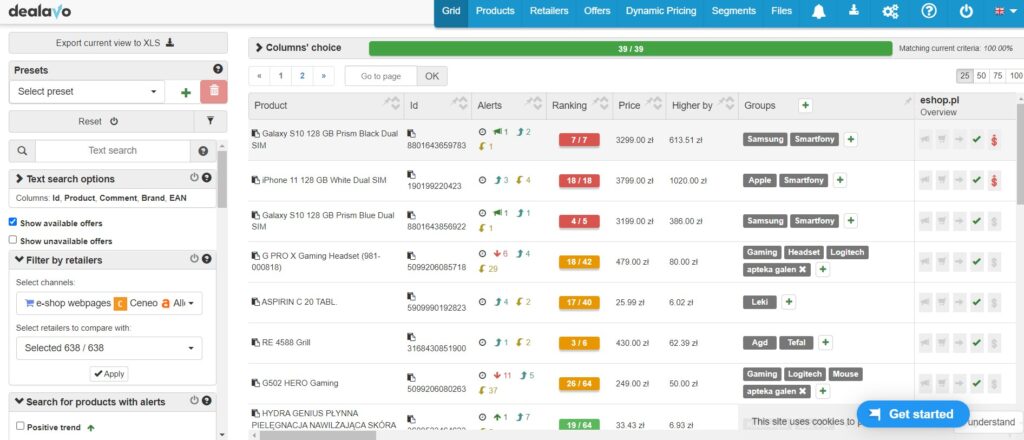
Dealavo price tracking & dynamic pricing tool works with any marketplace you need
How does Google Shopping automated pricing work?
The Google search engine is a very powerful tool that people all over the world use to find specific products. That’s why Google Shopping is the second most popular platform after Amazon for both customers and sellers to search, compare, and buy products.
Even though Google Shopping helps you compare prices, it mostly promotes products from companies that work closely with Google Corp. This means that using an independent tool to monitor prices can give you a better and more accurate understanding of the market.
Also, Google Shopping is a competitive place for sellers, especially those who are just starting out. But whether you’re experienced or new, you’ll still need to adjust to changes in the market.
Even though Google Shopping doesn’t have a Buy Box like Amazon or eBay, the prices you set are still really important for how often your products show up in search results. If your prices are competitive, more people will see your products.
This is where Dealavo’s Dynamic Pricing algorithms can be helpful. With the right strategy, you can use Dynamic Pricing to keep an eye on prices, use different tactics, set rules for your prices, and react quickly when your competitors change their offers or products.
On Which Platforms Is Automated pricing Applicable?
In the dynamic world of e-commerce, the versatility of repricing knows no bounds. Whether you’re harnessing the power of Woocommerce, navigating the features of Shopware, maximizing opportunities on Shoper, or embracing the user-friendly interface of Shopify, repricing is a tool that transcends platforms.
From small-scale entrepreneurs to established businesses, the ability to adapt and optimize pricing strategies remains a crucial element in staying competitive and capturing the attention of discerning shoppers. Regardless of the digital landscape you choose to conquer, automated pricing stands as a valuable asset, paving the way for increased visibility, enhanced sales, and a thriving online presence.
Repricing Software You Should Know
Dealavo
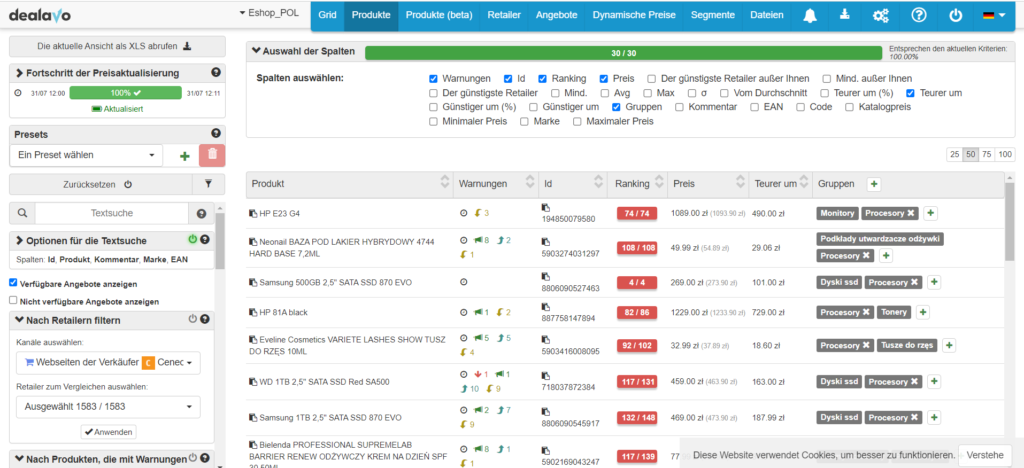
Dealavo is a price tracking and pricing automation tool that enables swift analysis of prices and product availability in the e-commerce market. Through its automated pricing module, online stores can automatically adjust prices according to the current market situation based on predefined rules. The new ROAS Booster service allows leveraging competitor data for optimizing Google Ads campaigns. This tool aids in boosting sales profits by implementing effective pricing strategies and saving time on market analysis. Dealavo operates internationally, monitoring thousands of websites across over 30 countries.
Prisync
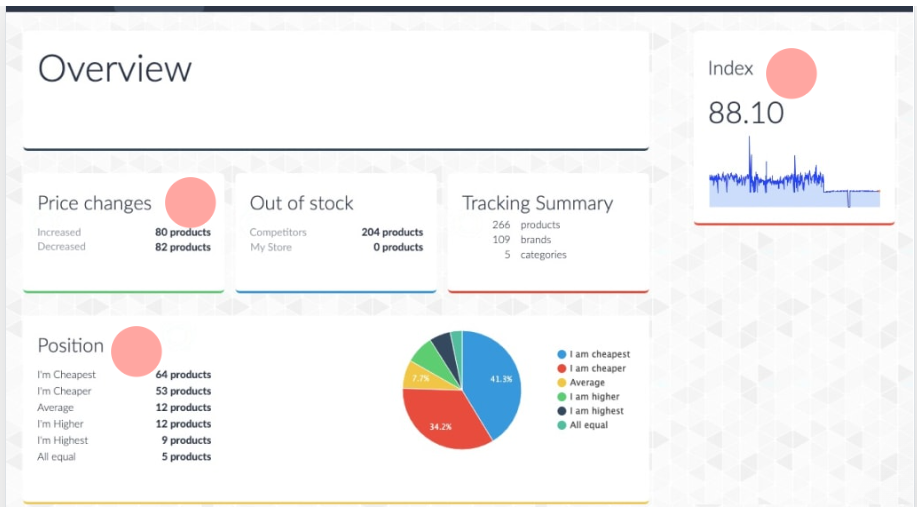
Prisync functions as a valuable solution designed mainly for online stores, equipping them to oversee competitors and formulate efficient pricing tactics. It has gained recognition for its smooth data import and export processes, along with its accurate tracking of prices and product availability.
For enterprises seeking a reliable dynamic pricing remedy, Prisync distinguishes itself with its user-friendly and intuitive user interface. Remarkably, it shines in customer service, setting it apart from other comparable tools in the market.
Price2Spy
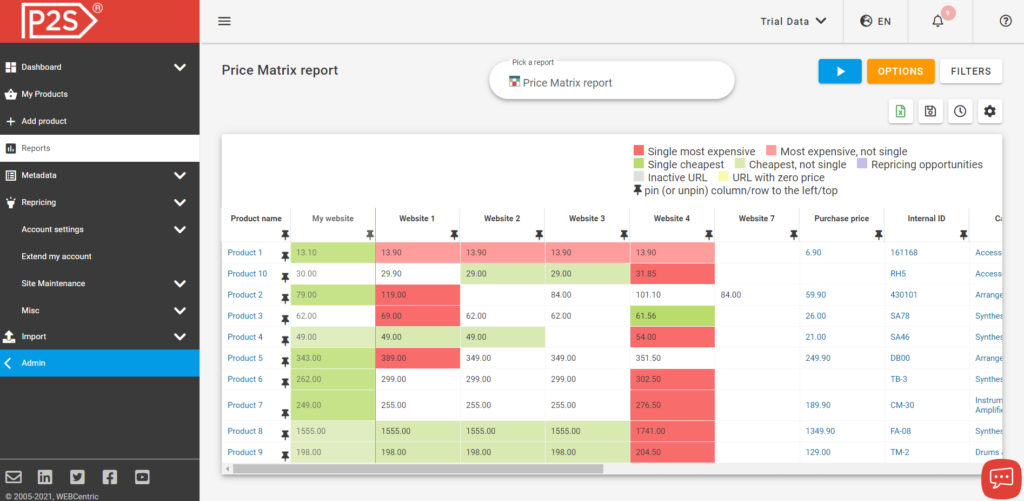
Price2Spy is a pricing tool for stores that uses Machine Learning and Artificial Intelligence. This helps different experts understand prices better and achieve good outcomes. The software can check any website, even if it seems hard. Price2Spy has useful features like demos, tutorials, and online help. Yet, some reports from the tool might be a bit tricky to understand.
Intelligence Node
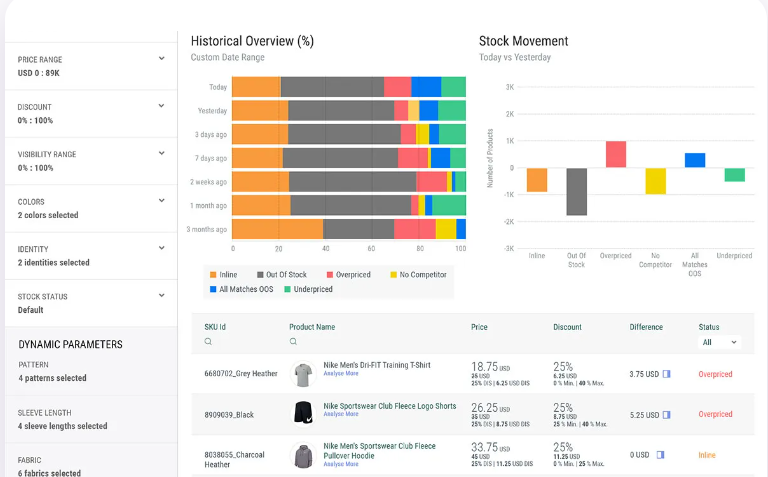
Intelligence Node has different parts: pricing & deals, product range & stock, brand solutions, and online shelf analysis. What’s important is that IntelligenceNode is really accurate, getting 99% of the data right. It’s worth mentioning that many big companies like Prada, Lenovo, Nestle, and LIDL use this platform. Together, these companies make more than $600 billion in sales around the world.
Competera
Here’s a simpler rewrite:
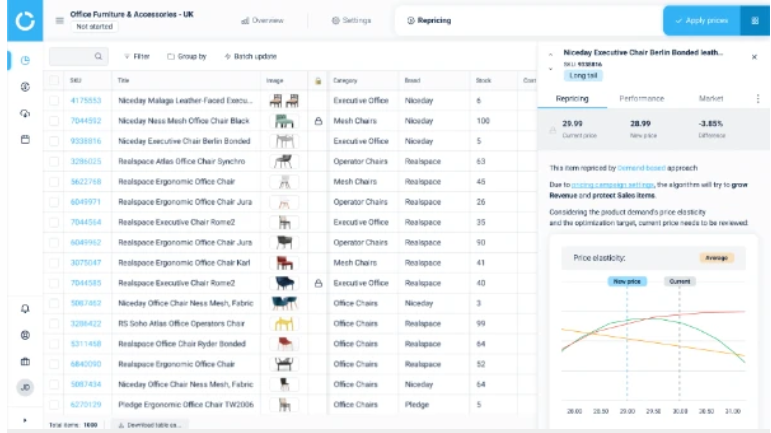
Competera tool uses both Artificial Intelligence and Machine Learning. It works for all kinds of businesses, whether they sell online, in physical stores, or have many brands. Competera stands out because it combines competitive data and helpful tools, regardless of a company’s goals. They have different products like Competitive Data and Pricing Automation. Some people say the tool could have more detailed stats about the data it gives.
Repricing FAQ from Dealavo Experts – when do you need repricing?
What is repricing and how does it work?
Automated pricing is a strategy that allows brands to react to changes in the market quickly. Whether it’s the product’s price, demand, supply, or changing trends that lead to market variations, dynamic pricing is something that comes in handy and enables retailers to adapt their prices in every situation.
This strategy (also known as dynamic pricing strategy) is based on setting as competitive prices as possible. Whenever other competitors change their prices, automated pricing should be considered to remain the brand’s competitiveness. You can do it manually or (what is more recommended) use a dedicated tool for it.
Do you need to automate product pricing decisions?
Absolutely, if you’re looking to streamline your pricing strategy and stay competitive in the dynamic market landscape, Dealavo’s solutions can help you automate your product pricing decisions effectively. By automating product pricing decisions, you can stay competitive without the manual effort of constant monitoring.
Whether you’re a new seller or an experienced retailer, automating product pricing decisions can save you time and help you achieve your pricing goals effectively.
How do repricing tools calculate the suggested price?
Pricing automation tools like Dealavo calculate the suggested price by considering a variety of factors that influence market dynamics. Our advanced algorithms take into account competitor prices, market trends, historical sales data, and your own pricing strategy goals. We analyze this data to determine the optimal price that aligns with your business objectives, whether it’s winning the Buy Box, maximizing profits, or maintaining a competitive edge.
I already have automated pricing software but have trouble implementing it. Can you help with that?
Of course, we’re here to assist you with that exact concern!
Our team of experts at Dealavo specializes not only in providing top-notch price tracking and pricing automation solutions but also in guiding you through the implementation process.
If you’re facing challenges with setting up your automated pricing tool, our experts can help you navigate through the intricacies, ensuring a smooth and effective implementation.
FAQ
What is repricing?
Repricing is the process of automatically adjusting product prices based on market conditions, competitor prices and predefined rules to stay competitive.
What is the difference between rule-based and algorithmic repricing?
Rule-based repricing follows predefined rules (e.g., “be 5% cheaper than competitor X”). Algorithmic repricing uses AI to learn from market data and optimize prices autonomously.
Ready to automate your pricing? Explore Dealavo Repricing AI — intelligent automated pricing for e-commerce. See Dealavo Dynamic Pricing for real-time price adjustments.